
Blog
Looking for a premium replacement? Buy American diploma replicas crafted with precision. We use high-quality paper, authentic raised seals, and accurate typography to match real US universities. Fast shipping and 100% satisfaction guaranteed.
US University Diploma Design Guide: Layout, Fonts & Security Features
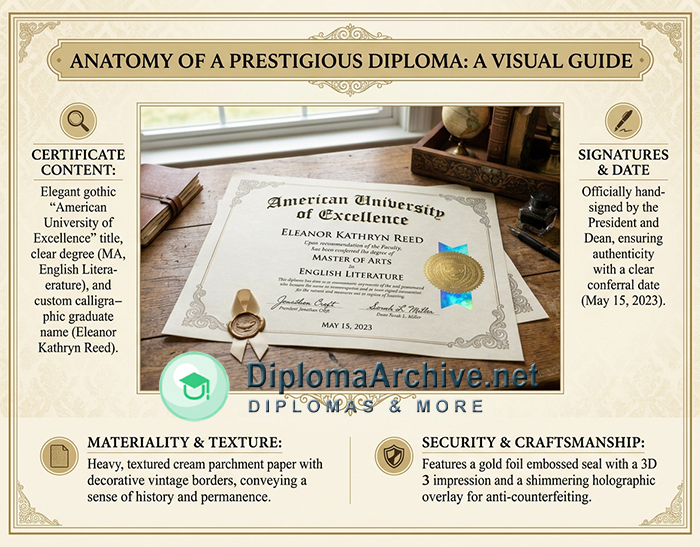
Ultimate Guide to US University Diploma Design: Layout, Paper, Fonts, and Security Features
Understanding the detailed craftsmanship of higher education credentials helps collectors, prop masters, and academic enthusiasts appreciate authentic documents. American university diplomas stand out globally due to their classic design traditions, premium materials, and modern security technologies.How to Get a Fake Diploma? Risks, Scams, Legal Consequences, and Legitimate Alternatives.
Anatomy of a Classic US University Diploma Layout
An authentic American degree follows a time-tested structural layout. Most institutions prioritize symmetry and legibility to maintain a formal aesthetic.
- Header Section: Displays the full legal name of the university, often arranged in an arched or centered layout.
- Recipient Statement: Includes phrasing like “The Trustees of the University hereby confer upon…” followed by the graduate’s full name.
- Degree Information: Specifies the degree awarded, such as Bachelor of Science or Master of Arts, alongside honor designations.
- Signatures and Dates: Houses official signatures from university presidents, board members, or deans at the bottom margins.
Learn more about samples of American college diplomas and certificates
Traditional Typography and Typography Choices
Fonts convey heritage and institutional authority. American universities rely heavily on traditional calligraphic typefaces.
| Font Category | Common Styles Used |
| Primary Heading | Old English, Blackletter, Cloister Black |
| Graduate Name | English Script, Edwardian Script |
| Body Text | Times New Roman, Garamond, Caslon |
Blackletter and Gothic Styles
Blackletter fonts remain the standard for university titles. These complex, heavy-stroked letters give diplomas an unmistakable ceremonial presence.
Script and Serif Accents
Script styles highlight individual student names, while clean Serif fonts like Garamond ensure legal disclaimers and degree descriptions remain clear and easy to read.
High-Grade Paper Materials and Tactile Texture
The physical paper stock represents an essential part of diploma quality. Standard printer paper fails to match the weight and texture of academic parchment.
- Heavyweight Parchment: Ranging between 24lb and 60lb parchment stock, providing structural stiffness.
- Cotton Fiber Content: Made with 25% to 100% cotton rag, giving documents long-term durability and resistance to yellowing.
- Textured Finishes: Features subtle linen, off-white, or ivory tones that reflect light naturally without harsh glare.
Security Features: Holograms, Seals, and Anti-Forgery Measures
Modern academic credentials incorporate advanced visual security to protect document integrity.
Metallic Foil and Raised Embossing
Metallic gold foil seals combined with 3D raised embossing create distinct tactile feedback. Running a finger over the seal reveals compressed paper fibers and crisp foil edges.
Security Holograms and Watermarks
Many institutions apply metallic holographic overlays that change color under direct light. Embedded watermarks and micro-printing prevent high-resolution scanning or direct digital copying.
Regional Design Differences Across American States
Regional culture and state history subtly influence diploma aesthetics.
| Region | Design Characteristics |
| East Coast (Ivy) | Minimalist, heavy Latin text, dry seals |
| West Coast | Modern layouts, full-color emblems |
| Midwest & South | Elaborate borders, vibrant gold foil |
East Coast Traditions
Northeastern schools lean heavily into traditional minimalist styles. Many Ivy League universities continue to print diplomas on heavy parchment with subtle dry-embossed seals and Latin phrases.
West Coast and Southern Variations
Western and Southern universities frequently embrace colorful state seals, metallic gold accents, and slightly larger paper dimensions, such as 11×14 inches.
Restoring and Displaying Academic Credentials
High-quality document replicas and replacements help graduates display their achievements safely while storing original credentials in secure archives. Accurate recreation requires exact matches in weight, font selection, and foil precision.
When restoring damaged documents or ordering high-fidelity novelty display certificates, selecting experienced craftsmen ensures every line, seal, and security detail matches institutional standards.College and university rankings in the United States.