
Australian Diplomas
Looking for a high-quality alternative? Buy our meticulously crafted replicas of university diplomas from around the world. We use premium paper, authentic embossing, and precise fonts to ensure perfect imitation of genuine diplomas from various universities worldwide. Fast shipping and a 100% satisfaction guarantee. Contact us if you don’t find what you need.
How to quickly own a University of south Australia diploma
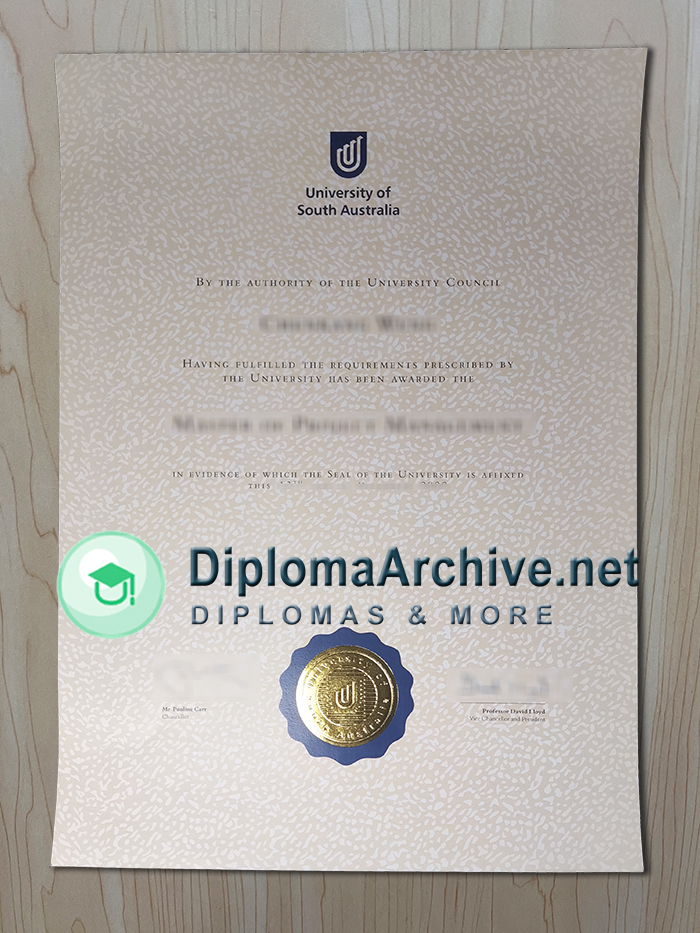
University of South Australia Diploma: History, Programs, Recognition and Safe Document Care
The University of South Australia (UniSA) has played an important role in Australian higher education, with a strong focus on practical learning, professional development and industry engagement. Although UniSA became part of Adelaide University in January 2026, its academic history, alumni community and qualifications remain an important part of South Australia’s higher education story.
For graduates, a University of South Australia diploma represents an important academic milestone. Therefore, understanding the university’s background, study areas, professional connections and document management procedures can help graduates protect their academic records for the long term.Order Your Custom Queensland University of Technology degree Copy Online.
1. University of South Australia History and Campus Development
The University of South Australia was formally established in 1991. However, its academic roots extend much further back, with more than 150 years of teaching, learning and professional education behind the institution. Over time, UniSA developed into a modern university with a strong emphasis on practical education and research with real-world applications.
UniSA operated several campuses across South Australia, including City West, City East, Magill, Mawson Lakes, Mount Gambier and Whyalla. This broad campus network supported students in metropolitan and regional communities while creating opportunities for study, research and community engagement.
Today, the university’s history has entered a new stage. UniSA and the University of Adelaide combined their strengths to create Adelaide University, which opened in January 2026. Even so, information about previous UniSA qualifications and academic records remains relevant to former students and graduates.
2. Popular Study Areas and Professional Programs
One of UniSA’s major strengths was its wide selection of professionally focused disciplines. Students could study areas such as business, accounting and finance, marketing, architecture, design, communication, engineering, health sciences, nursing, pharmacy, psychology, law and criminal justice.
In addition, UniSA developed programs around emerging industries and professional needs. Technology, computing, engineering, health, creative industries and business all formed important parts of its academic offering. As a result, students could connect classroom learning with practical career skills.
The university also placed considerable emphasis on research. Its research areas included advanced manufacturing, defence, energy, resources, health, engineering, technology, artificial intelligence, food and agriculture, and tourism and creative industries. This broad research profile supported collaboration between academic teams and external organisations.
3. Campus Culture, Student Experience and Industry Partnerships
UniSA developed a culture built around enterprise, innovation and professional preparation. Instead of focusing only on classroom theory, the university aimed to prepare students for changing workplaces and practical challenges.
Industry collaboration became one of UniSA’s distinctive features. The university reported more than 2,500 industry partnerships, covering areas such as internships, research, community engagement and professional collaboration. Its Enterprise Hub also worked with organisations of different sizes to address business challenges and develop new ideas.
Student placements provided another useful connection between education and professional life. These opportunities allowed students to gain workplace experience while organisations benefited from new perspectives and emerging talent. Therefore, UniSA’s industry-focused approach could give graduates a stronger connection between academic learning and professional development.
4. University of South Australia Diploma and Social Recognition
A university diploma is more than a printed document. It records an academic award that connects a graduate with an institution, a program and a completed course of study. For UniSA graduates, the parchment identifies important details such as the awarding institution, award title and completion or conferral information.
Official academic records also provide an additional way to demonstrate educational history. UniSA used the My eQuals platform for digital academic transcripts, and digitally issued documents viewed through the secure My eQuals portal are certified and authenticated by the university.
For this reason, graduates should keep both physical and digital academic records carefully. When an employer, educational institution or another authorised organisation needs evidence of previous study, an official transcript or digital academic document can provide useful supporting information.
For former students, it is also important to distinguish between a diploma or parchment and an academic transcript. A transcript records enrolment history, courses, results and awarded degrees, while the parchment serves as evidence of the academic award itself.
5. Protecting a University of South Australia Diploma from Accidental Damage
Academic documents can face everyday risks such as moisture, spills, bending, fading, storage problems or accidental damage. Therefore, graduates should keep a University of South Australia diploma in a dry, stable environment and avoid placing it where heat, sunlight or humidity can affect the paper.
A simple document-care routine can make a significant difference. Store the original in a protective archival-quality folder or document sleeve, keep it flat when possible, and maintain a secure digital record of important academic information.
If an original UniSA parchment becomes lost, destroyed, stolen or damaged, UniSA’s official graduation and records policy provides a replacement process. Graduates may apply for a replacement parchment using the prescribed application form, and additional requirements apply depending on whether the original was lost or damaged.
The replacement parchment reproduces key details from the original and includes the university seal. It also clearly indicates that it is a replacement parchment, helping distinguish it from the original document. For damaged documents, the application requires an explanation of the damage, while lost, destroyed or stolen parchments require a statutory declaration under the stated policy.
Because UniSA is now part of Adelaide University, former students should check the current official records service before submitting a request. Keeping original documents safe remains the simplest approach, while maintaining access to official digital records provides an additional layer of protection.
Frequently Asked Questions
1. Is University of South Australia still operating?
UniSA became part of Adelaide University in January 2026 following the merger with the University of Adelaide. Former UniSA qualifications and academic records remain relevant for graduates.
2. What can a University of South Australia diploma show?
A parchment records important award information, including the awarding institution, the full title of the award and relevant completion or conferral details.
3. Can I access my University of South Australia academic transcript digitally?
UniSA issued academic transcripts through My eQuals. The university states that digitally issued documents viewed through the secure My eQuals portal are certified and authenticated.
4. What should I do if my diploma is accidentally damaged?
If a UniSA parchment has been damaged, the official policy allows graduates to apply for a replacement parchment. The application includes an explanation of the damage and the applicable administration and delivery fee.
5. How should graduates protect their academic documents?
Keep the original parchment in a dry, secure place away from moisture and direct sunlight. In addition, retain access to official digital records and transcripts so that important academic information remains available when needed.