
American Diplomas
Looking for a high-quality alternative? Buy our meticulously crafted replicas of university diplomas from around the world. We use premium paper, authentic embossing, and precise fonts to ensure perfect imitation of genuine diplomas from various universities worldwide. Fast shipping and a 100% satisfaction guarantee. Contact us if you don’t find what you need.
Unbelievable way to get a John F. Kennedy University degree
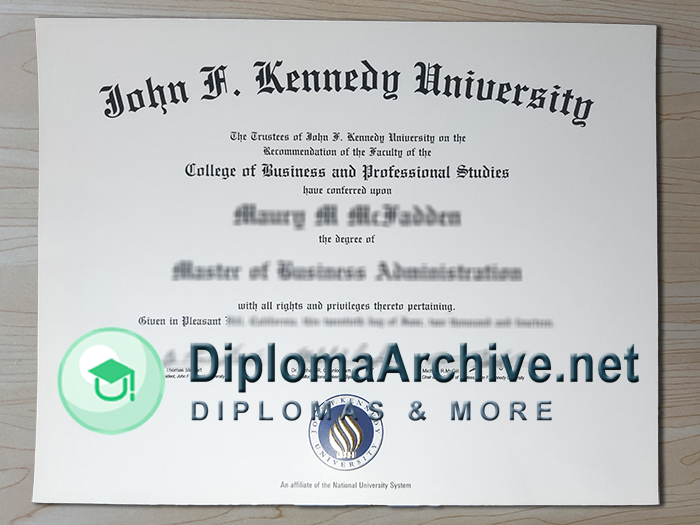
In the landscape of California higher education, John F. Kennedy University once stood as a unique institution. Founded in 1964 and named after the 35th U.S. president, it carried a progressive educational vision. Rather than following the traditional university path, it focused on people often overlooked by conventional education systems.
A University Built for “Non-Traditional Students”
From the very beginning, John F. Kennedy University committed itself to a clear mission.#Copy John F. Kennedy University degree. It aimed to offer higher education opportunities to adult learners, career changers, and those who needed flexible study options. In other words, it never chased prestige as a research powerhouse. Instead, it focused on being a school that truly helped ordinary people. This positioning earned it a distinctive reputation across the San Francisco Bay Area.
No Traditional Campus, Yet Solid Academics
Contrary to what many might expect, the school had almost no traditional campus. Where can I obtain a John F. Kennedy University diploma? Teaching was delivered mainly through distance education and hybrid learning models. In-person classes took place in rented office spaces or business parks. Even so, its academic structure remained quite complete. It housed several colleges, including undergraduate studies, psychology and holistic studies, and law.
Museum Studies: A Rare Gem Among Majors
Among its many programs, museum studies was one of the most recognizable offerings at John F. Kennedy University. This master’s program traced its roots to Lone Mountain College in San Francisco. It later developed tracks in collections management and educational interpretation. It even offered a dual MBA and museum studies degree. For students aiming at cultural institutions, such a program was rare across the United States.The Fastest Way to Replace a Lost Chapman University diploma.
A Pioneer in Sport and Community Psychology
Psychology served as another signature strength of the school. Its sport psychology program was among the earliest of its kind in the nation. It provided services to community schools and rehabilitation centers in Oakland. Meanwhile, the counseling psychology program operated several university counseling centers. These centers offered affordable mental health services to Bay Area residents. This blend of academic training and community service reflected the school’s “learning by doing” spirit.
The Law School’s Persistence and Limits
The law school at John F. Kennedy University offered both a four-year part-time and a three-year full-time Juris Doctor program. Its convenient scheduling especially attracted many working students. Its elder law clinic provided free legal aid to seniors facing eviction risks. This made it an important part of community service in the Bay Area. However, the law school was accredited by the California Committee of Bar Examiners rather than the American Bar Association. As a result, graduates faced practice restrictions outside California.
From Independence to Merger, Then Closure
In 2009, John F. Kennedy University joined the National University System. It still kept its original name and independent degree-granting authority. Nevertheless, declining enrollment and ongoing operational pressure eventually forced a difficult decision. The board announced that the school would cease operations at the end of 2020. Its programs and assets were transferred to other colleges within the National University System.
What Legacy Did It Leave Behind?
John F. Kennedy University has closed its doors, yet the educational philosophy it represented still deserves reflection. A school does not necessarily need a grand campus or top rankings. As long as it genuinely serves those who need educational opportunities, it holds its own value. For those who once studied or worked at John F. Kennedy University, this history is more than the rise and fall of a school. It is a living memory of educational equity and innovation.