
British Diplomas
Looking for a high-quality alternative? Buy our meticulously crafted replicas of university diplomas from around the world. We use premium paper, authentic embossing, and precise fonts to ensure perfect imitation of genuine diplomas from various universities worldwide. Fast shipping and a 100% satisfaction guarantee. Contact us if you don’t find what you need.
Finding It Hard to Get a Newcastle University degree Copy? Go Online
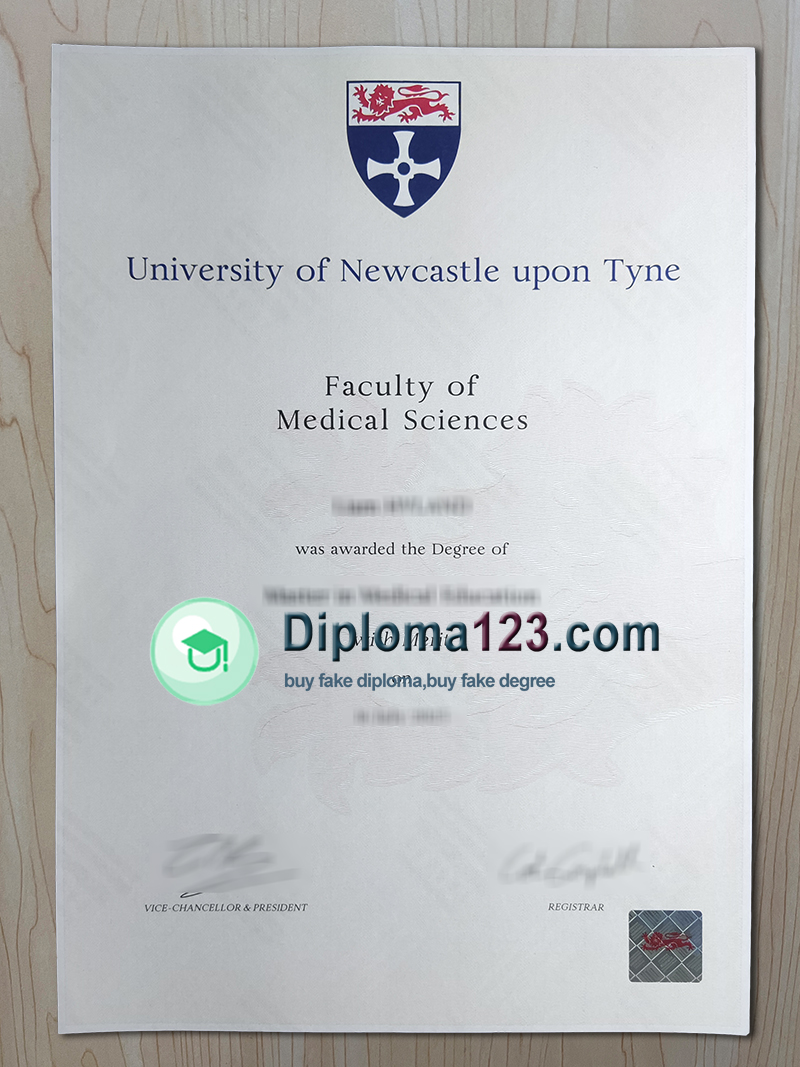
Newcastle University is a well-known public research university in Newcastle upon Tyne, in the northeast of England. As a member of the Russell Group, it has a strong reputation for research, teaching and academic development. Moreover, the university attracts students from many countries, creating an international learning environment where people can exchange ideas and learn from different cultures.How to Replace an London School of Economics diploma Online Fast.
The university combines academic knowledge with practical experience. Therefore, students can develop both subject knowledge and useful workplace skills during their studies. Whether they are interested in business, medicine, engineering or the arts, Newcastle University offers a wide range of opportunities to support their academic and personal growth.
A Long History of Academic Development
Newcastle University’s history dates back to 1834, #Copy Newcastle University degree.when the Newcastle School of Medicine and Surgery began teaching students. Later, Armstrong College opened in 1871 and focused on science and technical subjects. These early institutions helped establish the university’s strong connection with professional education and industrial development.
In 1937, the Newcastle colleges joined together to form King’s College, which belonged to the federal University of Durham. Then, in 1963, King’s College became the University of Newcastle upon Tyne, gaining independent university status. In 2006, the institution adopted the name Newcastle University for its public identity.
Over time, the university expanded its teaching and research activities. Today, it covers a broad range of academic fields and continues to work on important challenges in health, technology, society and the environment. As a result, its long history remains closely connected to its modern educational mission.
Popular Courses and Academic Strengths
Newcastle University offers undergraduate and postgraduate programmes across several subject areas. Students can choose courses according to their interests, career plans and academic strengths.
Medicine and Medical Sciences
Medicine and medical sciences remain important parts of the university’s academic tradition. Students can explore areas such as biomedical sciences, dentistry, pharmacy and other health-related subjects. In addition, research and practical learning help students understand how scientific knowledge can improve people’s lives.
For students interested in healthcare, these subjects can provide a foundation for careers in clinical practice, research, public health or related professions. However, some professional careers require additional qualifications, registration or supervised training after graduation.
Engineering and Computer Science
Engineering and computing are also attractive choices. Depending on the programme, students may study civil engineering, mechanical engineering, electronic engineering, computer science or software development.
Furthermore, these subjects encourage students to solve problems, analyse information and develop technical solutions. Through projects and practical assignments, students can connect classroom knowledge with real-world challenges. Consequently, graduates may pursue opportunities in technology companies, engineering firms, manufacturing, software development and related industries.
Business, Economics and Social Sciences
For students interested in management and the wider economy, Newcastle University offers programmes in business, economics, marketing and other social sciences. These courses help students understand how organisations operate, how markets change and how people make decisions.
Meanwhile, communication, teamwork and analytical thinking play an important role in many business programmes. These skills can support future careers in finance, consulting, marketing, human resources and management. Students who want to start their own businesses can also use their studies to develop a clearer understanding of planning and decision-making.
Arts, Humanities and Architecture
The university also provides opportunities to study subjects such as history, literature, languages, politics, architecture and related creative fields. These programmes encourage independent thinking, research and effective communication.
In particular, students learn to examine complex questions, build arguments and present their ideas clearly. As a result, they can prepare for careers in education, media, cultural organisations, public services and creative industries.
Campus Life and the Student Experience
Newcastle University benefits from its location in a lively and welcoming British city. Newcastle upon Tyne combines historic buildings and cultural attractions with modern shopping areas, restaurants, green spaces and entertainment venues. Therefore, students can enjoy a varied lifestyle while focusing on their studies.
Campus life also offers opportunities to make friends and explore new interests. Students can join societies, participate in sports, attend cultural events and take part in volunteering activities. These experiences help them build confidence and develop communication skills outside the classroom.
Furthermore, the university’s international community allows students to meet people from different backgrounds. By working with classmates who have different perspectives, students can improve their teamwork and broaden their understanding of the world.
At the same time, studying abroad requires careful planning. Students should consider tuition fees, accommodation, living expenses, transport and available support services before choosing a programme. Good preparation can make the transition to university life much easier.
Career Opportunities and Graduate Development
Career preparation is an important part of the Newcastle University experience. The university provides careers guidance, CV support, interview preparation, skills workshops and opportunities to connect with employers. In addition, many degree programmes offer placement options or other forms of practical experience.
According to the university’s published information, 94% of its 2020/21 graduates entered employment or further study within 15 months of graduation. The university also received five QS Stars for employability in 2025. Although these figures provide useful context, students should remember that employment outcomes vary by subject, individual experience and economic conditions.
Graduates may pursue careers in healthcare, engineering, finance, business, education, technology, research and public services. For example, a computer science graduate may explore software development, while a business graduate may consider marketing or management. Similarly, graduates in medical sciences may continue into research or further professional training.
However, a university degree alone does not guarantee a particular job or salary. Students can strengthen their prospects by gaining relevant experience, building professional networks and developing skills that employers value. Consequently, internships, placements, volunteering and personal projects can all make a useful contribution to career development.
Frequently Asked Questions
Q1: Where is Newcastle University located?
Newcastle University is located in Newcastle upon Tyne, in northeast England. The city offers access to cultural attractions, transport links and a wide range of student services.
Q2: What subjects is Newcastle University known for?
The university offers a broad selection of subjects, including medicine, biomedical sciences, engineering, computer science, business, architecture and humanities.
Q3: Does Newcastle University support career development?
Yes. Students can access careers guidance, CV reviews, interview preparation, employer events and opportunities for practical experience, depending on their programme and eligibility.
Q4: Can international students study at Newcastle University?
Yes. The university welcomes international applicants. However, entry requirements, English-language standards, tuition fees and visa conditions depend on the chosen programme and the student’s circumstances.
Q5: How can students prepare for life after graduation?
Students should focus on academic performance while also gaining practical experience, improving communication skills and exploring career options. In addition, they should keep their academic records and graduation documents in a safe, organised place for future reference.
Conclusion
Newcastle University combines a long academic history with a broad selection of courses, an active student community and career development opportunities. From medicine and engineering to business and the humanities, students can explore different subjects while building skills for the future.
Ultimately, choosing the right university involves more than reputation alone. Students should compare course content, entry requirements, costs, learning opportunities and career goals. With careful planning and active participation, studying at Newcastle University can become a valuable step towards further education and a future career.